village-center-Saint-Paul-Community

Headline news

Thursday 17 th April 2025


Chloe was a bit nervous as it was her First Washing of the Feet. The small church in Smyrna endured the vicissitudes of history and after 2000 years of history, was now the only church inspired solely by John’s Gospel in all Christendom.

First Washing of the Feet Day was the day in which Chloe would fully participate with the rest of the community, in the Eucharist. It was not an easy path. Chloe had to go through a very practical preparation, some special sessions on empathy, respect, acceptance...

She had to join several groups who would distribute food to some homeless in the big city, help at a dispensary in the sketchy part of town, participate and prepare a program for women’s empowerment, and still contribute as a volunteer in an environmental awareness project.

She felt how important this moment was: The big thanksgiving, the Eucharist. She wanted to make Jesus present in service as reminded by her, now almost memorized, through the Eucharist reading read a million times during every Sunday at the Eucharistic Gathering. The words of consecration. Jesus’ final action and instruction during the Last Supper: «After he had washed their feet, had put on his robe, and had reclined again, he said to them, “Do you know what I have done to you? You call me Teacher and Lord, and you are right, for that is what I am. So if I, your Lord and Teacher, have washed your feet, you also ought to wash one another’s feet. For I have set you an example, that you also should do as I have done to you John» (13: 12-15).

She liked it. In service and through service she felt connected to Jesus. It was not so much about creeds and dogmas; it was about a commitment to service. What a beautiful way to make Jesus present into the world!

Of course, Chloe knew about the other Eucharistic traditions originating from the Synoptic Gospels (Matthew, Mark and Luke.) She knew that for them the bread and the wine were at the center of the Sacrament. But Chloe always thought that the Johannine vision of the Eucharist, through the Washing of the Feet, was as meaningful, at least to her.

That Sunday when people lined up for the moment of the Washing of the Feet, Chloe was thrilled: Seven elders, at the back of the church, not wanting to be at the center, began washing the feet of the seven candidates, who in turn washed the feet of other seven people, and they washed seven more people, so that they all washed each other’s feet, as commanded by Jesus in John’s Gospel. The Eucharist took time, as it does every Sunday really.  For Chloe though, it was a moment of commitment and a moment of joy. From that day on, service was to become central to her life, whether in the community, at the church or in her family. She knew that service was at the core of her faith. Service, she thought, is the way to bring Jesus to others and she felt ready for it.


Saturday 12 th April 2025


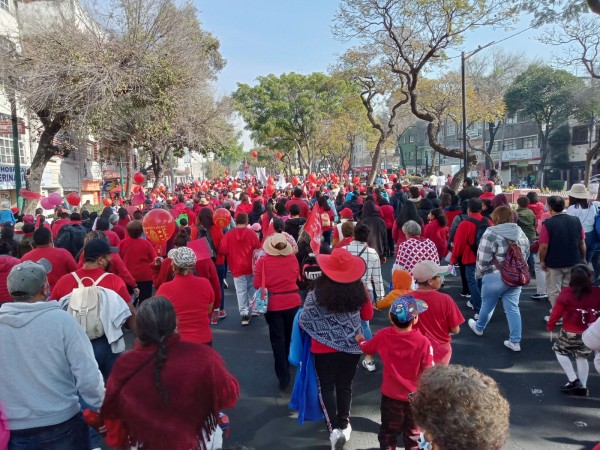
Every year we are starting this Holy Week listening to the episode of the entry of Jesus into Jerusalem, riding on a donkey and being cheered upon by the crowds of his disciples and followers, all of them fired up by the promise that he might be vindicated as the Messiah, which is why they acclaim him as the king of Israel, the son of David. This scene, which we find in the four gospels, has even been named as the “triumphant entry” into Jerusalem, an understanding that without doubt would have been alien to the mindset of Jesus, who always tried to avoid that the expectations of a messianic leadership could grow around his person.

The events that happened in Jerusalem in the following days, which we also listen to in today’s passion narrative, and which will culminate with his shameful death outside the city walls within just five days from today, are a cruel reminder about the fragile meaning that an enthusiastic crowd may carry: today’s approval will soon turn into deception, and later on into outward rejection, because Jesus is not going to fulfil the expectations of the people who were longing for a political leader who might guide them towards a more prosperous life and turn them into a powerful and respected nation among its neighbors.

The contrast between the episode of the so-called triumphant entry into Jerusalem today, cheered and applauded, and the way Jesus will exit the city carrying the wood of the cross, mocked and spat upon, couldn’t be greater. Only a group of women will remain at his side, knowing that the gospel Jesus preached with his life and his words has to be embraced and understood in the heart of every single person, far from the multitudes who only project upon their leaders their own dreams and ambitions.

Jesus did never allow himself to be fooled by the crowds who were asking for a messianic leadership to make their nation great again, and announced several times that they themselves would end up demanding his death, as it turned out. As followers of Jesus, we should avoid the ever-present temptation throughout history of populism and of yielding to the longings of enthused crowds of diverse political and social signs, always eager of finding leaders who can deliver their own targets and goals. The gospel of Jesus, yesterday, today, and forever, is a path of loving self-giving of one’s own life, which is made real in the encounter with our neighbor, far from the crowds and their wishes and longings, as Jesus himself showed us with his own life.


Friday 21 st March 2025


Lent, this special season that prepares us for Holy Week, is a season that, among other things, has a penitential component. It is good, from time to time, to review our lives, our attitudes, and the way we treat others, and to do so with a sense of repentance. Where am I allowing myself to be led by selfishness and indifference? Have I hurt the people around me? Am I wasting time and energies in activities that don’t help to build the Kingdom?
 
We should not live immersed in an unhealthy sense of guilt, but there’s nothing wrong with looking in the mirror from time to time, with absolute sincerity, asking ourselves how we could improve aspects of our daily lives that are not entirely in tune with the Gospel, or that contradict it.
 
Jesus did not come to overwhelm us with the weight of our sin: in fact, the Gospels make it very clear that he came to free us, among other things, from feeling guilty about everything, assuring us that no matter how many mistakes we make, we can always count on the Father’s mercy. And yet, it is also true that on many occasions Jesus spoke harshly about those who, believing themselves to be perfect and holy, were incapable of self-criticism and did not accept the need to reorient their lives toward God.
 
On one occasion, looking with sorrow at his contemporaries, he said, «this generation is perverse. It asks for a sign, and none will be given it except the sign of Jonah» (Luke 11:29). In fact, we read this text on Wednesday of the first week of Lent. The interesting thing about this sentence is that Jonah, when he went to preach the conversion of Nineveh did not perform any sign! Indeed, before the Ninevites, Jonah did not do any miracle. The biblical text tells us that when he finally arrived at the great city (after trying to escape the mission God had entrusted to him), he simply «walked for a whole day, proclaiming, 'In forty days, Nineveh will be destroyed!'». That’s all. He didn’t back up his preaching with any flashy gestures, nor did he accompany his words with any demonstration of power, showing that Yahweh was on their side. He simply announced that God’s patience was running out... and that was enough for the Ninevites to make a resolution to change their ways and convert.
 
No sign will be given to us, either, other than the (non)sign of Jonah. Therefore, we should not wait for some spectacular and incontestable event to happen in our lives in order to change those attitudes that distance us from God. The great sign we need to reorient our lives toward goodness has already been given to us: the preaching of Jesus, the message conveyed to us by the Gospels. What more can we hope for, what could be more definitive than the words of the Messiah?
 
We can all sometimes fall into the self-deception of telling ourselves that we are waiting for something prodigious to happen, a miraculous sign, a truly singular event, to initiate the processes of change that are essential in our lives. «I will change,» we tell ourselves, «when» —and we condition our conversion on the occurrence of great wonders around us. In reality, waiting for astonishing miracles to occur so that we can begin to correct our mistakes is a form of immobility. This Lent, we would do well to remember that we will be given no sign other than the sign of Jonah: the sign of a man announcing that there are better ways to live, with no other power than the reason and force of his words.


Friday 31 st January 2025


Instead of the 4th Sunday in Ordinary Time, this weekend we will be celebrating the Feast of the Presentation of the Lord—also known as the Feast of Candle Mass. This fact causes us to miss what we would have read on ordinary Sunday, the synagogue's response to Jesus' programmatic speech. After reading the quote from Isaiah that Jesus had read with all intention, after omitting a verse where the day of God's vengeance against the enemies of Israel was announced, after a dialogue with the assembly in which Jesus says that he is not surprised that he is not a prophet in his land—Jesus will suffer the first attempt against his life: “When everyone in the synagogue heard this, they became furious and, rising up, threw him out of the town and took him to a precipice of the mountain on which his people were built, with the intention of throwing it off the cliff” (Luke 4:29-29.)
 
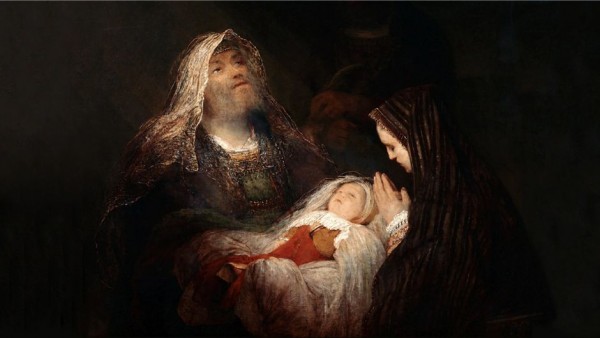
The gospel of the Presentation of the Lord rewinds history and places us back in Jesus' early childhood. It sounds like one of the stories we read at Christmas. Not in vain, traditionally this holiday used to mark the end of the Christmas season. Mary and Joseph, observant of the Law, take Jesus as their first son to be presented in the Temple. Many of the “themes” of the Christmas gospels emerge: Jesus is taken to the Temple, the institution that will end up executing him; we witness the reaction of those who meet Jesus—during Christmas we saw the reaction of the shepherds, of Herod, of the Magi—now we see the reaction of the elders Simeon and Anna. It is very possible that the meeting of these elders fulfills the same function that the episode of the Epiphany fulfills in the gospel of Matthew.
 
It is curious that this Anna carries the same name as Samuel's mother. No doubt Luke wants his readers to make this connection, which first century Jews, the first to receive this gospel, would have made almost automatically. The two women see how God fulfills their hopes: receiving a son—Samuel—and the Son: Jesus.
 
In Simeon's words we detect a connection with the reaction of the people in the synagogue in Nazareth. Simeon proclaims that this child will be “glory to Israel” but also “light to all nations.” The universality of Jesus and his message will always be a problem for nationalist fanatics—both in Nazareth and in places closer to home. And to Mary he says, “This child has been appointed for the ruin and revival of many in Israel, as a sign that will cause contradiction, so that the thoughts of all hearts will be revealed. And a sword will pierce your soul.” In the synagogue Jesus has begun to be a “sign of contradiction.”
 
Understanding Jesus as a stumbling block, as a sign of contradiction, can be a fruitful topic. Moreover, it is easy to fall into the temptation of only understanding Jesus as a sign of contradiction against the “world” or the “culture”. But, what would Jesus say to us, personally, that would provoke a reaction of deep rejection in us? What things that we believe absolutely would Jesus question? What kind of challenges would he present to us if he showed up in the middle of our assembly any Sunday like he did on the Sabbath in the synagogue of his native land?
 
In the spirit of this fest day in which candles are blessed, we ask the Lord to continue illuminating our lives, our contradictions, and to continue giving light to all our darkness.


Saturday 7 th December 2024


One of the “mottos” of Advent, one of the phrases that captures the spirit of this time that we began last Sunday, is “Come, Lord Jesus,” taken from the end of the Book of Revelation (Rev 22:20). It is, we could say, one of the most appropriate prayers of Advent.
 
And yet, it is important to make sure that we understand these words correctly. Because they are not a request, nor a demand that we address to Jesus so that he decides to come to us, as if he, for some reason, was hesitant and we had to convince him to actually come to the world.
 
“Come, Lord Jesus” is a request addressed to ourselves: a prayer in which we ask to gather the wisdom and the strength to open the doors of our lives to him and remove all the obstacles that we sometimes put in the way, blocking his way. Obstacles that we put because, in reality, we are afraid of his coming.
 
And why, we should ask ourselves, are we afraid of Jesus? Why do we resist Jesus' coming (even if we keep repeating "Come, come...")?
 
One possible answer is that we know, or we sense, that in one way or another Jesus always comes to unsettle us. He comes to give us a little push, to urge us to go further in our generosity, to abandon the routines that numb our conscience, and to make an exodus, outside the comfort that binds us and the territories that we already know, towards the risky life of the Gospel. That is why deep down, perhaps unconsciously, we fear Jesus' coming.
 
It would be good to identify the attitudes that tend to tie us into a desperate search for comfort. Review them, understand that they impoverish us and reject them. Then we will be able to say with all sincerity and vigor, in this Advent and always: "COME, LORD JESUS!"


RSS news feed

Blog archives


Contact

1505 Howard Street
Racine, WI 53404, USA
racine@comsp.org
Tel.: +1-262-634-2666

Mexico City, MEXICO
mexico@comsp.org
Tel.: +52-555-335-0602

Azua, DOMINICAN REPUBLIC
azua@comsp.org
Tel. 1: +1-809-521-2902
Tel. 2: +1-809-521-1019

Cochabamba, BOLIVIA
cochabamba@comsp.org
Tel.: +591-4-4352253

Bogota, COLOMBIA
bogota@comsp.org
Tel.: +57-1-6349172

Meki, ETHIOPIA
meki@comsp.org
Tel.: +251-932508188